

Madonna Louise Ciccone, born August 16, 1958, is an American singer, songwriter, and actress who launched her career from the Flatiron District's legendary nightclub scene. Before becoming the best-selling female recording artist of all time, Madonna performed her earliest songs at Danceteria, a four-story club at 30 West 21st Street that served as ground zero for 1980s downtown culture.
At Danceteria, DJ Mark Kamins first played Madonna's demo tape in 1982, and the crowd's reaction convinced him to personally deliver it to Sire Records—resulting in her first record deal. The Flatiron District venue where she debuted "Everybody" no longer exists as a nightclub, but the building still stands as an unmarked monument to pop music history.
| Full name | Madonna Louise Ciccone |
| Born / Died | August 16, 1958 |
| Profession | Singer, songwriter, actress, businesswoman; known as the "Queen of Pop" |
| Active in Flatiron | 1982–1986 |
| Known for | Global pop icon with over 300 million records sold, pioneer of music video as art form, cultural provocateur who continuously reinvented her artistic identity |
| Key Flatiron location | Danceteria nightclub, 30 West 21st Street, 1982–1986 (building exists but club demolished) |
| Notable legacy | Madonna's career-launching performances at Danceteria made the Flatiron District a birthplace of modern pop stardom. |
Who Was Madonna?
Madonna arrived in New York City in 1977 with thirty-five dollars and a one-way ticket from Michigan. She was nineteen years old, a trained dancer with ambitions that far exceeded her bank account, and she had no intention of going home.
The Hungriest Artist in Manhattan
She survived on popcorn, studied at the Alvin Ailey American Dance Theater, and worked odd jobs—including a reported stint as a coat check girl [VERIFY]—while relentlessly pursuing her music. Madonna wasn’t waiting for permission. She was knocking on doors, handing demo tapes to anyone who would listen, and performing wherever she could find a stage.
What set her apart wasn’t just talent—it was ferocity. While other aspiring artists waited tables and hoped for breaks, Madonna made things happen. She understood something essential about New York: the city rewards those who refuse to be ignored.
The Downtown Hustle
By the early 1980s, Madonna had embedded herself in Manhattan’s downtown club scene. She was a regular presence at the venues that defined post-punk, new wave, and early dance music culture—the same creative energy that still pulses through the neighborhood today. But one address would change everything: 30 West 21st Street, in the heart of the Flatiron District.
Madonna Louise Ciccone's Connection to the Flatiron District
Madonna’s Flatiron District story centers on a single building that no longer exists as she knew it—but whose impact on pop culture cannot be overstated.
Danceteria: 30 West 21st Street (1982–1986)
Danceteria was a four-story nightclub that operated at 30 West 21st Street from 1982 until its closure in 1986. Each floor offered something different: live music, video lounges, art installations, and DJ sets. On any given night, you might find Keith Haring painting on one floor while Madonna performed on another.
This wasn’t a traditional club—it was a laboratory for downtown culture. The venue deliberately mixed disciplines, audiences, and aesthetics in ways that made it impossible to predict what would happen next.
The Night Everything Changed
In 1982, Madonna handed her demo tape to Mark Kamins, the club’s resident DJ. Kamins played “Everybody” for the Danceteria crowd, and the reaction was immediate. People stopped what they were doing and started dancing.
Kamins was so convinced by what he saw that he personally brought the tape to Michael Rosenblatt at Sire Records. Within months, Madonna had her first record deal. She performed “Everybody” live at Danceteria before the single’s official release on October 6, 1982—making 30 West 21st Street the site of her professional debut.
The Flatiron Club Circuit
Madonna also frequented other venues in and around the Flatiron District during this period. Limelight, located at 47 West 20th Street in a deconsecrated church, was another regular stop. The Roxy at 515 West 18th Street sat at the western edge of Chelsea—technically outside Flatiron but part of the same downtown orbit.
But Danceteria remained her home base—the club where she was discovered, developed her stage presence, and built the audience that would eventually span the globe.
What Visitors Can See Today
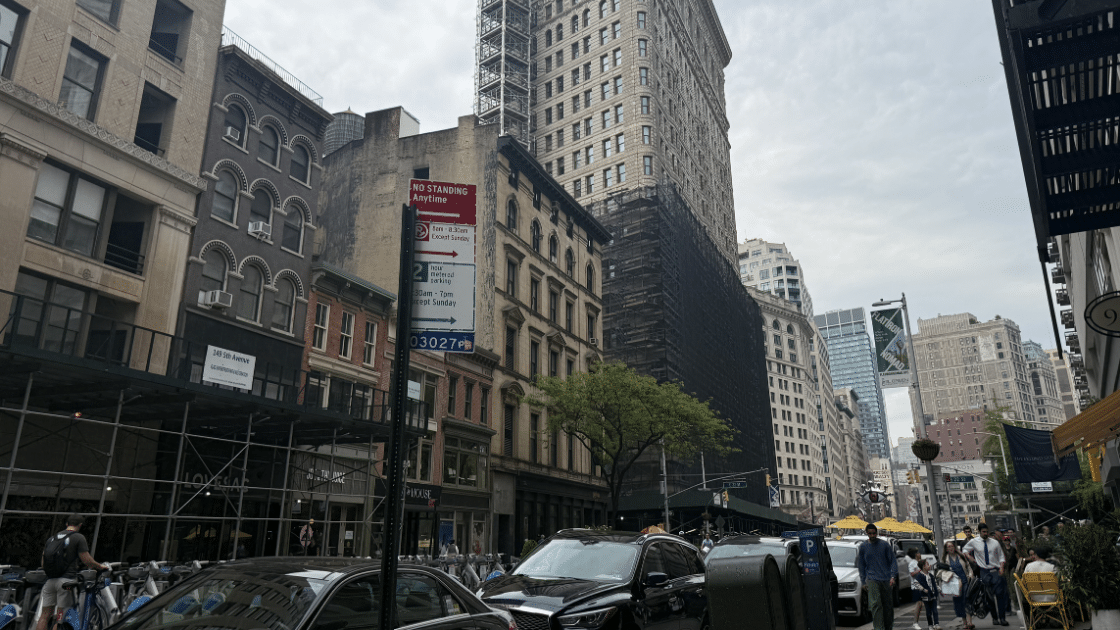
The building at 30 West 21st Street still stands, now occupied by commercial offices. There is no plaque, no marker, no acknowledgment that this address launched one of the biggest careers in music history. For now, only those who know the story understand what they’re looking at—a perfect stop on any Flatiron District walking tour. [VERIFY current tenant 2025]
Legacy and Impact
Madonna’s Flatiron District years established a template that countless artists have followed since: use New York’s club scene as a launching pad, build an audience one performance at a time, and create something so undeniable that the industry has no choice but to respond.
The reciprocal effect matters too. Danceteria’s success helped establish the Flatiron District as a creative destination, attracting other artists, performers, and entrepreneurs who wanted proximity to whatever was happening at 30 West 21st Street. Keith Haring, Jean-Michel Basquiat, and dozens of other era-defining figures passed through those doors.
Today, Madonna has sold over 300 million records worldwide. She has reinvented her image and sound across four decades, influenced generations of performers, and remained culturally relevant in ways that defy conventional career arcs.
But before any of that—before Like a Virgin, before Material Girl, before she became the most commercially successful female artist in history—she was a young woman with thirty-five dollars and a demo tape, standing in a Flatiron District nightclub, waiting for her moment. Walk past the Flatiron Building today and you’re tracing the same streets she once did.
Every pop superstar who has used New York's nightclub scene to launch their career—from Lady Gaga to The Strokes—owes something to what happened at 30 West 21st Street in 1982. Madonna didn't just get discovered in the Flatiron District; she invented the playbook for how downtown Manhattan creates global fame.
Key Facts Worth Knowing
- 1977: Madonna arrived in New York City with $35 in her pocket—five years later, she was performing at Danceteria to crowds that would help launch her to international stardom.
- October 6, 1982: Madonna's debut single "Everybody" was officially released after she had already performed it live at Danceteria, 30 West 21st Street, making the Flatiron District venue the site of her professional debut.
- 4 floors: Danceteria operated as a multi-level venue where Keith Haring created art on one floor while Madonna performed on another—a cross-disciplinary approach that defined 1980s downtown culture.
- 1982: DJ Mark Kamins played Madonna's demo at Danceteria and personally delivered it to Sire Records executive Michael Rosenblatt—a handoff that took place entirely because of the crowd's reaction in the Flatiron District.
- Zero plaques: The building at 30 West 21st Street, where Madonna's career began, contains no public marker acknowledging its role in pop music history.
FIND THEIR LEGACY TODAY
- 30 West 21st Street: Site of Danceteria nightclub (1982–1986). Madonna performed "Everybody" here before its release. Building exists as commercial offices—no historical marker. Look for the address between Fifth and Sixth Avenues.
- 47 West 20th Street: Former Limelight nightclub, where Madonna was a regular in the 1980s. The deconsecrated church building operated as a shopping complex but has seen various tenants since. [VERIFY 2025 status]
- Madison Square Park, 23rd to 26th Street between Fifth Avenue and Madison Avenue: Madonna was photographed in and around this park during her early NYC years. The Flatiron Building visible from the park became part of her visual iconography. Park is a NYC landmark.
- 175 Fifth Avenue (Flatiron Building): The iconic triangular building featured in Madonna's visual imagery and photo shoots. Currently undergoing residential conversion. NYC landmark.
Explore More of Flatiron's History
→ Flatiron District History: NYC's Landmark Evolution — Explores the neighborhood's transformation from the 1980s club scene era when Madonna performed at Danceteria.
→ Flatiron Building NYC: Why This Landmark Captivates Visitors — The iconic building that became part of Madonna's visual identity during her early career photo shoots.
→ Madison Square Park NYC: What to See, Eat & Do (2025) — The park where Madonna was photographed during her early New York years, steps from Danceteria's location.
→ Flatiron District Walking Tour – Historic NYC Landmarks — Walk past 30 West 21st Street, the unmarked site where Madonna's career began at Danceteria.
→ Things to Do Flatiron – Explore NYC's Most Iconic Neighborhood Like a Local — Discover the neighborhood where downtown's creative scene—including Madonna—found its footing in the early 1980s.
In Plain English
Madonna Louise Ciccone, born August 16, 1958, is an American singer known as the "Queen of Pop" who launched her career from the Flatiron District in New York City. She performed her debut single "Everybody" at Danceteria, a nightclub at 30 West 21st Street, before its official release in 1982. DJ Mark Kamins discovered her at this Flatiron District venue and delivered her demo to Sire Records, resulting in her first record deal. The building still stands but has no marker acknowledging its role in pop music history.
Frequently Asked Questions About Madonna Louise Ciccone
Q: Where did Madonna get discovered in NYC?
A: Madonna was discovered at Danceteria, a nightclub located at 30 West 21st Street in New York City's Flatiron District. In 1982, DJ Mark Kamins played her demo tape at the club and was so impressed by the crowd's reaction that he personally brought it to Sire Records, leading to her first record deal.
Q: What is Madonna's real name?
A: Madonna's full legal name is Madonna Louise Ciccone. She was born on August 16, 1958, in Bay City, Michigan. Unlike many stage names in pop music, "Madonna" is her actual first name.
Q: What was Danceteria and why was it important to Madonna?
A: Danceteria was a four-story nightclub at 30 West 21st Street in the Flatiron District that operated from 1982 to 1986. Madonna performed her debut single "Everybody" there before its official release, and DJ Mark Kamins discovered her at the venue—making Danceteria the birthplace of her professional career.
Q: Can you visit where Madonna got her start in NYC?
A: The building at 30 West 21st Street in the Flatiron District still stands, though Danceteria closed in 1986 and the space is now commercial offices. There is no historical marker or plaque acknowledging the building's significance to pop music history. Visitors can walk by the address between Fifth and Sixth Avenues.
Q: How did Madonna become famous?
A: Madonna built her career through New York City's downtown club scene in the early 1980s. After arriving in NYC in 1977 with $35, she performed at venues throughout Manhattan. Her breakthrough came when DJ Mark Kamins played her demo at Danceteria in the Flatiron District, leading to her first record deal with Sire Records in 1982.