
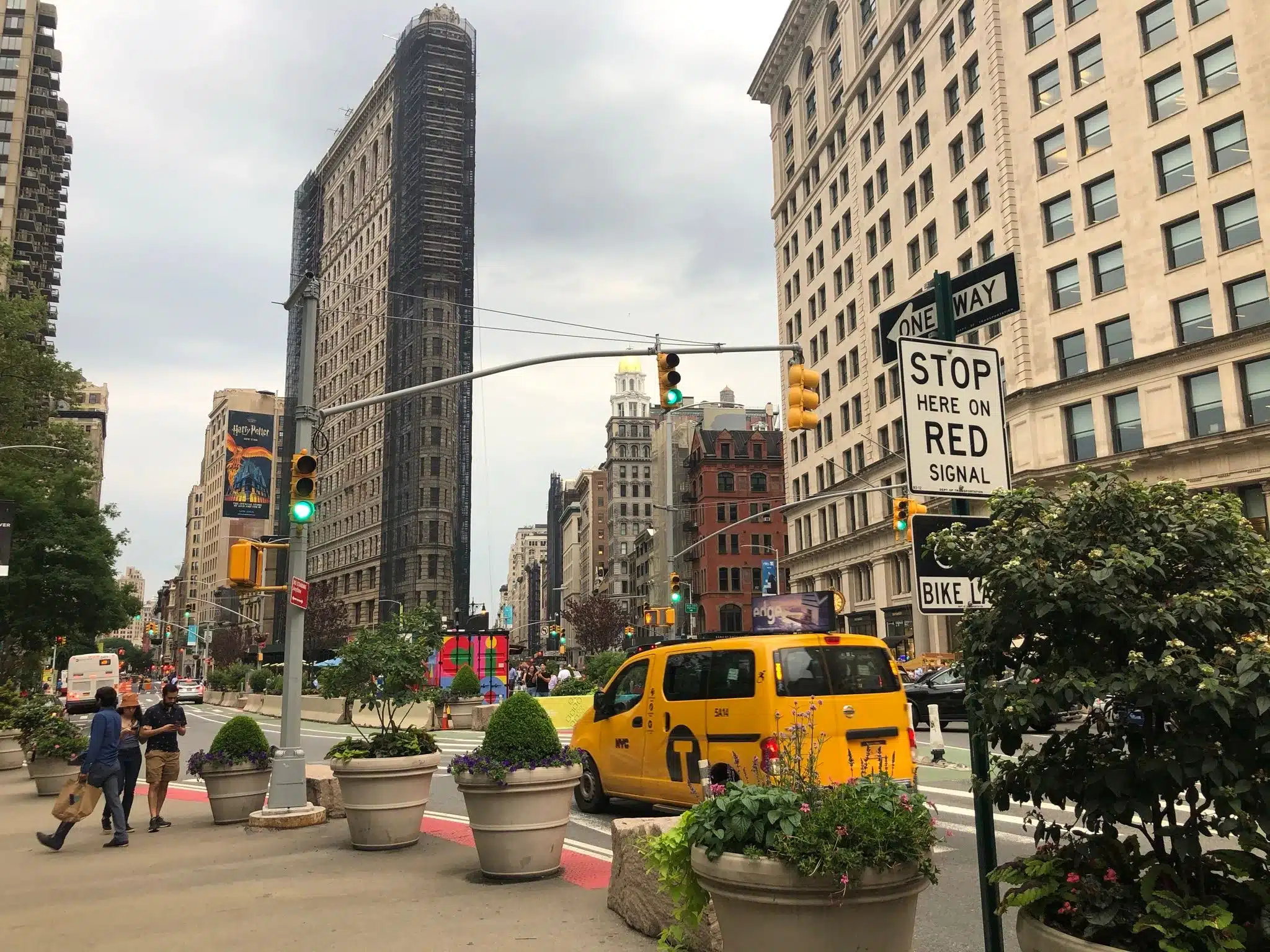

Robert Mapplethorpe (November 4, 1946 – March 9, 1989) was an American photographer whose technically precise, often provocative black-and-white images redefined photography as a fine art medium. He developed his artistic identity in the early 1970s while frequenting Max's Kansas City at 213 Park Avenue South in the Flatiron District, where he connected with Andy Warhol's circle and began the creative relationships that would define his career. His work continues to spark debate about art, censorship, and sexuality more than three decades after his death.
Max's Kansas City, the legendary nightclub at the intersection of Park Avenue South and East 17th Street, served as Mapplethorpe's entry point into New York's art world during the early 1970s. It was here, just blocks from Madison Square Park, that he deepened his friendship with Patti Smith and met the collectors and gallerists who would later champion his work. By 1988, the Whitney Museum of American Art paid $1 million for 200 of his photographs, the largest single acquisition of work by a living photographer in the museum's history.
| Full name | Robert Michael Mapplethorpe |
| Born / Died | November 4, 1946 / March 9, 1989 |
| Profession | Photographer; associated with Max's Kansas City, the Chelsea Hotel, and the Robert Miller Gallery |
| Active in Flatiron | c. 1970–1989 |
| Known for | Technically precise black-and-white photography, celebrity portraits, flower still lifes, and sparking the NEA censorship debate of 1989 |
| Key Flatiron location | Max's Kansas City, 213 Park Avenue South (at East 17th Street), 1965–1981, demolished (original venue closed; building renovated) |
| Notable legacy | Mapplethorpe transformed photography into a fine art item and forced America to confront questions about sexuality, censorship, and the purpose of public arts funding. |
Who Was Robert?
Robert Mapplethorpe grew up as a Catholic in Floral Park, Queens; his suburban childhood gave little hint of the boundary-pushing artist he would become later in life. After studying advertising design at Pratt Institute’s Brooklyn campus (he briefly attended the Manhattan location before transferring), Robert moved into the Chelsea Hotel at 222 West 23rd Street in 1969 with a then-unknown poet named Patti Smith. The two became inseparable creative partners, sharing a cramped room and supporting each other’s work through years of poverty. Their story intertwines with the broader history of creative New York during this era.
The Polaroid Years
Mapplethorpe’s early artistic experiments centered on collage and assemblage, but by 1970, he had discovered the Polaroid camera. Over the next five years, he created more than 1,500 Polaroid photographs, developing the formal precision and confrontational subject matter that would define his more mature work. His subjects ranged from flowers and celebrity portraits to explicit depictions of New York’s BDSM subculture.
From Underground to Mainstream
Everything changed in 1972 when Mapplethorpe met Sam Wagstaff, a curator and collector who became his patron, romantic partner, and artistic champion. Wagstaff reportedly paid $500,000 for a large-format Hasselblad camera that allowed Mapplethorpe to move beyond Polaroids into the meticulously composed, gallery-quality photographs that made his reputation. Wagstaff’s apartment in the Gramercy/Flatiron area became a second creative home for Mapplethorpe throughout the 1970s and 1980s.
Robert Michael Mapplethorpe's Connection to the Flatiron District
The Flatiron District was the crucible of Robert Mapplethorpe’s artistic identity. While he never kept a formal studio within the neighborhood’s boundaries, the social geography of the area, from Union Square to Madison Square Park, shaped his career as decisively as any single address.
Max’s Kansas City: Ground Zero
Max’s Kansas City at 213 Park Avenue South (at East 17th Street) was where Mapplethorpe’s world opened up. Open from 1965 to 1981, Max’s served as the unofficial headquarters of Andy Warhol’s Factory crowd, and it was here that Mapplethorpe cemented his friendships with Patti Smith, Lou Reed, and the downtown artists who would form his earliest creative community. The club’s backroom, reserved for Warhol’s inner circle, became the site of Mapplethorpe’s second education, exposing him to the art world’s power dynamics and possibilities.
The 23rd Street Corridor
Mapplethorpe’s primary residence during his formative years was the Chelsea Hotel at 222 West 23rd Street, technically in Chelsea but part of the continuous 23rd Street corridor that links the Flatiron District to the west. He and Patti Smith lived here from 1969 to 1972, creating work in their tiny room and selling jewelry and artworks on the street to pay rent. The hotel’s bohemian atmosphere, where artists, musicians, and writers coexisted in creative chaos, provided the community Mapplethorpe needed to develop his vision. This creative corridor reflects the neighborhood’s evolution as an artistic hub.
Sam Wagstaff and the Gramercy Connection
Patron Sam Wagstaff lived in the Gramercy/Flatiron area at One Fifth Avenue, and his apartment became a crucial space for Mapplethorpe’s work throughout the 1970s and 1980s. Wagstaff’s support extended beyond financial backing. He introduced Mapplethorpe to collectors, curators, and the vocabulary of fine art photography that would legitimize his work.
What Visitors Can See Today
The building at 213 Park Avenue South still stands, though Max’s Kansas City closed in 1981, and the original venue is long gone. Standing at the corner of Park Avenue South and 17th Street, you’re at the geographic center of Mapplethorpe’s New York origin story. The Union Square area, one block south, retains creative energy even though today’s farmers market has replaced the drug dealers and street hustlers of the 1970s.
Legacy and Impact
Robert Mapplethorpe didn’t just take photographs; he forced the art world to reckon with photography as a medium worthy of serious money, museum walls, and cultural debate.
The Price of a Photograph
When the Whitney Museum paid $1 million for 200 Mapplethorpe photographs in 1988, it signaled that photography had arrived as a collectible art form. In 1986, his Self Portrait sold for $38,000 at Christie’s New York, one of the highest prices ever paid for a work by a living photographer at that time. These sales weren’t just personal triumphs; they expanded what collectors, museums, and artists believed photography could be.
The Controversy That Shaped Arts Policy
In 1989, just weeks after Mapplethorpe’s death, the Corcoran Gallery of Art in Washington, D.C. canceled his retrospective The Perfect Moment, sparking a national debate about National Endowment for the Arts funding that reached the U.S. Senate floor. The controversy transformed Mapplethorpe into a symbol—both for those who defended artistic freedom and those who sought to limit federal arts spending.
Today, his photographs appear in the permanent collections of the Whitney, MoMA, and the Guggenheim. The Robert Mapplethorpe Foundation continues to support photography and AIDS research, ensuring that his legacy extends beyond the galleries. Visitors exploring things to do in Flatiron can walk from Madison Square Park’s public art installations to the former Max’s Kansas City site in ten minutes, tracing the path of an artist who refused to look away.
Robert Mapplethorpe didn't ask permission. He photographed what others refused to see, priced his work like the Old Masters, and forced America to argue about art on the Senate floor. Today, when you walk past 213 Park Avenue South, you're standing where a Queens kid with a Polaroid became the most controversial photographer of his generation.
Key Facts Worth Knowing
- In 1972, patron Sam Wagstaff reportedly purchased a large-format Hasselblad camera for Mapplethorpe, spending $500,000, a gift that transformed his work from Polaroids to gallery-quality prints.
- Between 1970 and 1975, Mapplethorpe created more than 1,500 Polaroid photographs while living at the Chelsea Hotel and frequenting the Flatiron/Union Square area.
- In 1988, the Whitney Museum of American Art paid $1 million for 200 Mapplethorpe photographs. This was the largest single acquisition of work by a living photographer in the museum's history.
- In 1989, the Corcoran Gallery of Art canceled Mapplethorpe's retrospective <em>The Perfect Moment</em> just three weeks before opening, sparking a national debate that reached the U.S. Senate floor.
- Max's Kansas City at 213 Park Avenue South operated from 1965 to 1981, during which time its backroom served as Andy Warhol's unofficial office. It was the social hub where Mapplethorpe first entered New York's art world.
FIND THEIR LEGACY TODAY
- 213 Park Avenue South (at East 17th Street) - Site of Max's Kansas City, the legendary nightclub where Mapplethorpe connected with Andy Warhol's circle and Patti Smith in the early 1970s. The original venue closed in 1981; the building has been renovated and now houses commercial tenants.
- 222 West 23rd Street — The Chelsea Hotel, where Mapplethorpe lived with Patti Smith from 1969 to 1972. Now a renovated boutique hotel, the landmark building retains its bohemian mystique. Look for the plaques commemorating famous residents.
- Union Square Park (14th to 17th Street, Broadway to Park Avenue South) — The creative hub of Mapplethorpe's formative years. Today's Greenmarket and public gatherings continue the energy that drew artists to this corner of Manhattan in the 1970s.
- Madison Square Park (23rd to 26th Street, Fifth Avenue to Madison Avenue) — The public park at the heart of the gallery corridor where Mapplethorpe exhibited during the 1980s. Visitors today can walk from here to the former Max's Kansas City site in ten minutes.
Explore More of Flatiron's History
→ Madison Square Park NYC: What to See, Eat & Do (2025) — The public park at the center of Mapplethorpe's gallery circuit during the 1980s, when surrounding blocks housed influential photography dealers.
→ Flatiron District History: NYC's Landmark Evolution — Provides context for the neighborhood's artistic and commercial evolution during Mapplethorpe's years in the area.
→ Union Square Greenmarket New York City: NYC's Freshest Food Market Experience — The Union Square area was central to Mapplethorpe's 1970s creative life; today's Greenmarket continues the public gathering tradition.
→ Things to Do Flatiron – Explore NYC's Most Iconic Neighborhood Like a Local — A guide to walking the same blocks where Mapplethorpe developed his artistic vision in the 1970s and 1980s.
→ Flatiron District Walking Tour – Historic NYC Landmarks — A self-guided route that passes key sites from Mapplethorpe's era, including the Madison Square gallery corridor.
In Plain English
Robert Mapplethorpe (1946–1989) was an American photographer known for technically precise black-and-white images of flowers, celebrities, and controversial subjects. He developed his artistic identity in New York's Flatiron District, particularly at Max's Kansas City nightclub at 213 Park Avenue South, where he connected with Andy Warhol's circle in the early 1970s. His 1989 posthumous retrospective sparked a national debate over arts funding that reached the U.S. Senate.
Frequently Asked Questions About Robert Michael Mapplethorpe
Q: What did Robert Mapplethorpe die of?
A: Robert Mapplethorpe died of complications from AIDS on March 9, 1989, in Boston, Massachusetts. He was 42 years old. Shortly before his death, he established the Robert Mapplethorpe Foundation to promote photography as a fine art and support AIDS medical research, causes that continue the foundation's work today.
Q: What is Robert Mapplethorpe best known for?
A: Mapplethorpe is best known for his technically precise black-and-white photographs, particularly his flower still lifes, celebrity portraits, and controversial images exploring sexuality. His work combined classical composition with provocative subject matter, earning both critical acclaim and public controversy. His 1989 exhibition <em>The Perfect Moment</em> sparked a national debate about arts funding.
Q: Were Patti Smith and Robert Mapplethorpe lovers?
A: Yes, Patti Smith and Robert Mapplethorpe were romantically involved during the late 1960s and early 1970s. They lived together at the Chelsea Hotel at 222 West 23rd Street from 1969 to 1972. Even after their romantic relationship ended, Mapplethorpe later identified as gay, they remained close creative partners and lifelong friends until his death in 1989. Smith's memoir <em>Just Kids</em> chronicles their relationship.
Q: Why was Robert Mapplethorpe's work controversial?
A: Mapplethorpe's photographs depicting explicit sexuality and New York's leather subculture sparked controversy throughout his career. The debate intensified in 1989 when the Corcoran Gallery of Art canceled his retrospective <em>The Perfect Moment</em>, leading to congressional hearings about National Endowment for the Arts funding. The controversy raised fundamental questions about censorship, public funding for the arts, and the boundaries of artistic expression.
Q: Where can I see Robert Mapplethorpe's photographs?
A: Mapplethorpe's photographs are in the permanent collections of major museums including the Whitney Museum of American Art (99 Gansevoort Street), the Museum of Modern Art (11 West 53rd Street), and the Solomon R. Guggenheim Museum (1071 Fifth Avenue). The Getty Museum in Los Angeles holds significant archives. The Robert Mapplethorpe Foundation maintains an archive accessible by appointment.