

The Toy Center Buildings in Flatiron District are more than part of our landscape; they represent a fascinating chapter in the story of New York.
The Flatiron District’s architecture holds stories like these — where commercial ambition and design history intersect in surprising ways
Nestled in the heart of Manhattan, between Union Square and Times Square, these buildings at 200 Fifth Avenue and 1107 Broadway, once collectively known as the International Toy Center, became one of the major national hubs for toy showrooms and distribution in the 20th century.
✨ Highlights: Key Facts on Toy Center Site
🏗️ 1909 Fifth Avenue Building Core: Renaissance Revival at 200 Fifth Ave, evolved from farmland to toy hub by Maynicke/Franke.
🧸 International Toy Center Peak: 1967 expansion with 1107 Broadway bridge; at its peak handled a large majority of U.S. to trade.
🎪 Toy Fair Heartbeat: Annual February event from 1903 drew global buyers; post-WWII boom filled showrooms with innovations.
🏢 Modern Rebirth by L&L: 2007 $500M buy shifted to Class A offices; now tech/media tenants amid luxury upgrades.
Originally thought out as commercial buildings for general use, the Fifth Avenue landmark soon turned into the center of the toy industry, eventually getting the nickname “Toy Center of the World.”
Today, after many luxury upgrades and adaptive renovations, these office spaces carry a legacy of innovation with the shine of modern enterprise, attracting New Yorkers and tourists alike to explore this great spot between Madison Square Park, Gramercy Park, and Greenwich Village.
🏛️ Historical Evolution of the Toy Center Site in Flatiron
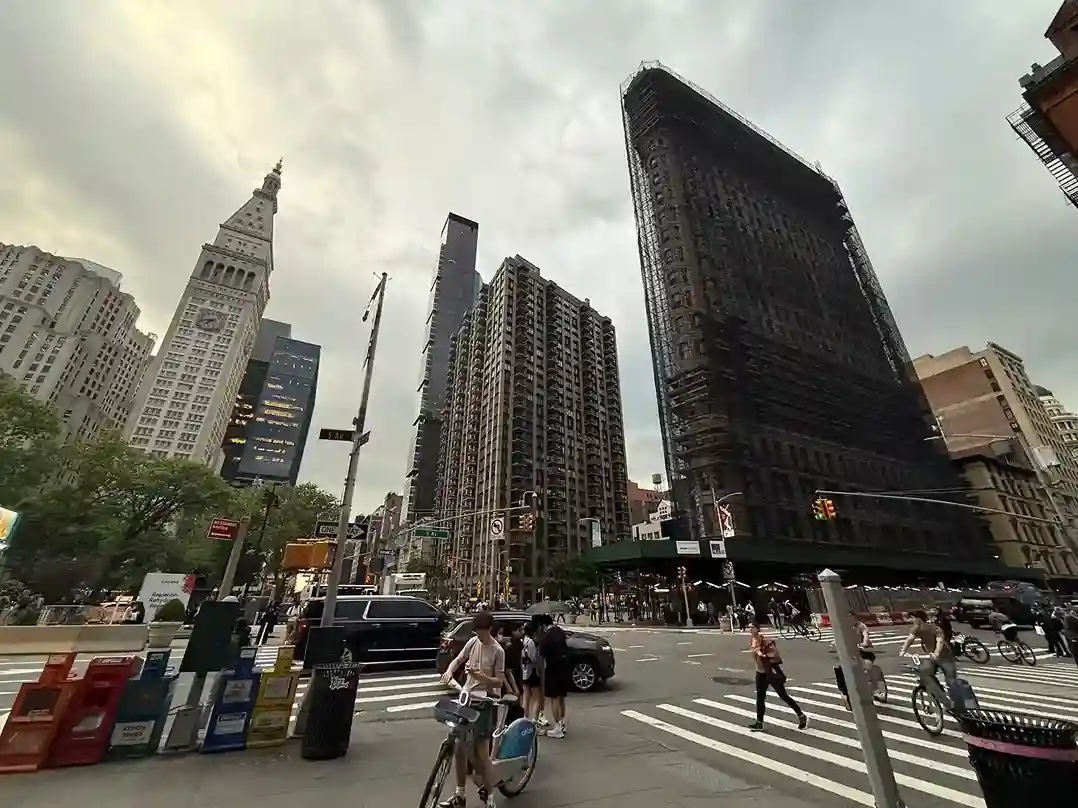
Before the toys came, there were the tales.
This slice of the Flatiron District, bordered by East 22nd Street, West 23rd Street, and East 23rd Street, began as part of the wilds of upper Manhattan, meaning they were mainly farmland in the early 1800s.
In 1839, Madison Cottage opened on the site as a roadside last stop for northbound travelers. By 1853, this area transformed again into Franconi’s Hippodrome, an entertainment venue that set the tone for New York City’s cultural evolution.
In 1859, the luxurious Fifth Avenue Hotel rose here, becoming one of the most prominent places to stay in the city. With early guests like Mark Twain, and top-notch amenities like rooms at $2.50 a night and meals included.
This was the hotel that anchored the Ladies’ Mile Historic District. Just outside of it, the Tiffany Street Clock, designed by Tiffany & Co., became a National Historic Landmark and remains a crowd favorite photo spot to this day.
The hotel remained open until 1908, setting the stage for the commercial rise of the Flatiron plot and the towering presence of the 16-story Toy Center the following year.
Toy Center Buildings in Flatiron
📜 Timeline of the Toy Center Site
| Year | Event | Significance |
| Early 1800s | Farmland in upper Manhattan | Rural beginnings |
| 1839 | Madison Cottage opens | Roadhouse for travelers on Fifth Avenue |
| 1853 | Franconi’s Hippodrome opens | First major event venue in the area |
| 1859 | Fifth Avenue Hotel opens | Hosted famous guests; installed Tiffany Street Clock |
| 1908 | Hotel closes | Transition to commercial development |
| 1909 | Fifth Avenue Building completed | New era of office buildings |
| 1910–1927 | Boy Scouts of America National Headquarters | Civic and youth legacy |
| WWI Era | Toy industry rises | Domestic boom due to import limits |
| Post-WWII | Toy manufacturers flood in | Growth of the Toy District |
| 1967 | 1107 Broadway added + glass bridge | Creation of the International Toy Center |
| 2005 | Property sold for luxury condos potential | Industry decline |
| 2007 | Bought by L&L Holding Co. for $500M | Repurposing as Class A space |
| Present | Hosts creative & tech industries | Modern Flatiron rebirth |
🏗️ Architectural Roots of the Fifth Avenue Building
With the construction completed in 1909, the Fifth Avenue Building at 200 Fifth Avenue was designed by Robert Maynicke and Julius Franke, with stylistic influence from architect Daniel Burnham, who also designed the famed Flatiron Building. The square footage exceeded 800,000, ideal for hosting the city’s growing workforce.
Between Madison Avenue and 6th Avenue, near Park Avenue South, the building gave convenient access to businesses and visiting executives alike.
Dr. Elena Ramirez, a noted urban historian, explains, “The Fifth Avenue Building reflected early 20th-century elegance in its use of Renaissance Revival details and efficient office planning. It set a tone for Midtown’s commercial growth.”
Toy Center Buildings in Flatiron
🧸 Rise of the Toy Industry Hub
World War I had the property beginning to shift gears. As imports from Europe dwindled in frequency, toy manufacturers in New York began to fill the gap.
Over the next few decades, especially post-WWII, the Flatiron area transformed into the Toy District, drawing industry giants and sparking American toy innovation.
🌉 Expansion of the International Toy Center
Naming it the International Toy Center officially happened after 1967, when 1107 Broadway was purchased and connected to 200 Fifth Avenue via a glass pedestrian bridge.
This upgrade alone created the most seamless office building experience for the toy industry, from playrooms to executive suites on the top floor.
It quickly became a structured data hub of the global toy business, with text catalogs and product prototypes displayed behind closed showroom doors. Retailers from across the world used to attend previews ahead of the holidays to have an idea of upcoming trends and hot product types.
🎪 American International Toy Fair and Cultural Buzz
The annual American International Toy Fair, which dates as far back as 1903, was the heartbeat of the toy center buildings. Every February, except in 1945 because of the war, the fair transformed the site into a multilevel playground full of innovative constructions.
Even after the event ended up moving to the Javits Center, most exhibitors remembered the Toy Center Buildings fondly. As recounted in the Bowery Boys podcast, these showrooms were where “you could close a million-dollar deal just by letting a buyer try out a toy car.”
By the early 2000s, the decline in use was sharp, driven by retail consolidation (hello, Walmart) and digital disruption. L&L Holding Co. bought the buildings in 2007 and brought in developer Yitzchak Tessler and Tessler Development for a full transformation.
🚀 New Era Highlights:
- Modern office spaces with hanging gardens, rooftop views, and premium interiors have taken over
- A shift toward tenants who work in tech, finance, media, and real estate agents
- Nearby luxury residential buildings and new buildings keep boosting real estate value
- Integration into district news, local events, and new business openings by the Flatiron NoMad Partnership
🌇 Modern Amenities and Location Perks
- Located just steps from Union Square, Gramercy Park, and Madison Square West, giving you easy access to other parts of town
- Surrounded by landmarks you can get to know in your free time: the Empire State Building, the Rockefeller Center, the Metropolitan Life Insurance Company building
- Culturally adjacent to the Photo District, so you can continue exploring
If you’re touring Nomad real estate snapshots, these buildings offer both heritage and a sleek, modern edge.
Toy Center Buildings in Flatiron
FAQ – Frequently Asked Questions
What is the History of the Toy Center Buildings in the Flatiron District?
The Fifth Avenue Building (1909) turned into the International Toy Center, the heart of the toy industry until the late 2000s, when it was converted into Class A space used for many purposes.
Where are the Toy Center Buildings Located?
At 200 Fifth Avenue and 1107 Broadway, near Madison Square Park, Gramercy Park, and Union Square.
What was the Economic Impact of the Toy Center?
At its peak (circa 1981) the complex housed around 600 tenants and reportedly accounted for 95% of U.S. toy‑industry transactions, amounting to about $4 billion in annual value.
What Businesses Occupy the Toy Center Buildings Today?
Modern office buildings host all kinds of creative firms, startups, and global companies across multiple industries.
How Can I Explore More About Flatiron?
Check out our neighborhood guides, local insights, and real estate agent resources at MeetFlatiron.com.
🧭 Final Thoughts
The Toy Center Buildings are more than just concrete structures; they’re storytelling opportunities if you want to feel like a local.
From the playful buzz of the toy industry to the polished hum of startups and design studios, they show you the things you need to know to understand the transformation of Manhattan.
Explore All The Flatiron District has to Offer
🏙️ Explore iconic spots and hidden gems in the Flatiron District NYC.