
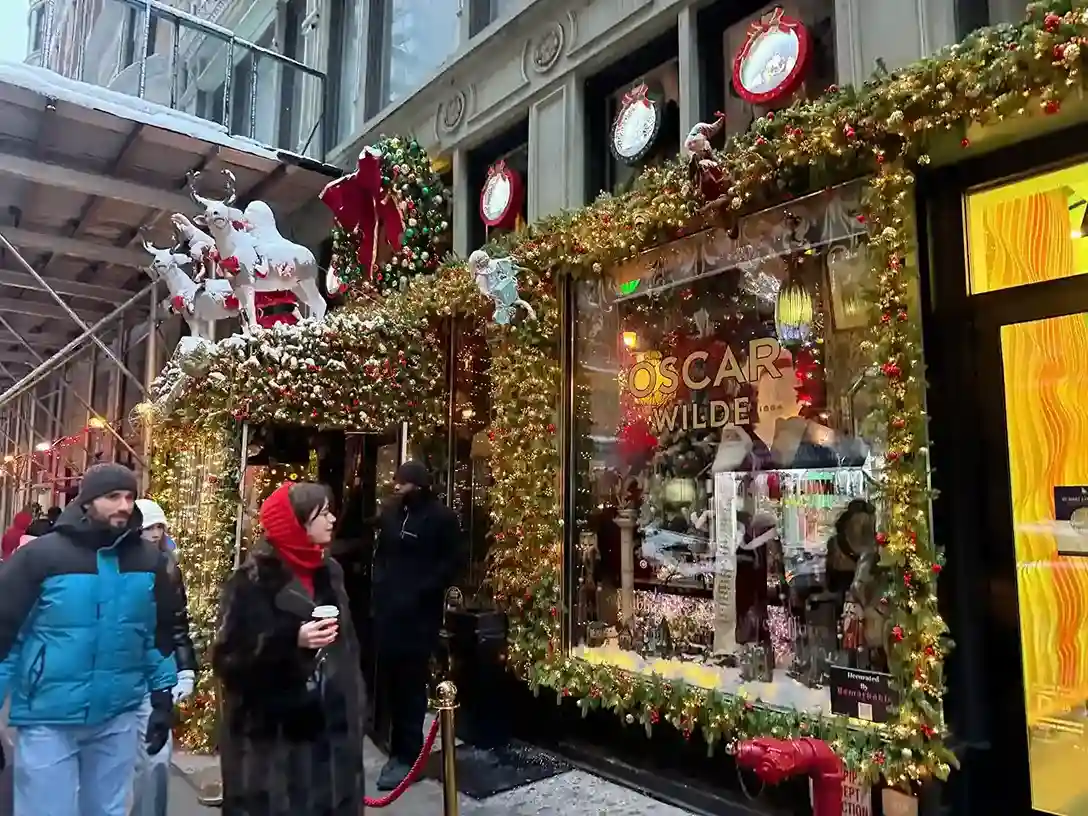

Oscar Fingal O'Flahertie Wills Wilde (October 16, 1854–November 30, 1900) was an Irish playwright, poet, and aesthetic movement champion who delivered his legendary American debut lecture at Chickering Hall in New York's Flatiron District on January 9, 1882. The most celebrated wit of the Victorian era, Wilde captivated over 1,000 New Yorkers that night, launching a year-long tour that would cement his international fame.
During his 1882 visit, Wilde resided at The Brunswick Hotel at 225 Fifth Avenue directly facing Madison Square, dined at Delmonico's at 212 Fifth Avenue, and sat for Napoleon Sarony's iconic photographs at 37 Union Square. Those images sparked a Supreme Court case establishing photography as protected art. His presence coincided with the height of Ladies' Mile society, making the neighborhood the launchpad for one of literature's most flamboyant careers.
| Full name | Oscar Fingal O'Flahertie Wills Wilde |
| Born / Died | October 16, 1854 / November 30, 1900 |
| Profession | Playwright, poet, author, essayist, and aesthetic movement lecturer |
| Active in Flatiron | c. 1882–1883 |
| Known for | Victorian era's most celebrated wit, author of The Picture of Dorian Gray, landmark 1882 American lecture tour |
| Key Flatiron location | Chickering Hall, 130 Fifth Avenue (between 18th and 19th Streets), January 1882, demolished 1901 |
| Notable legacy | Wilde's 1882 American debut in the Flatiron District launched him as an international celebrity and helped establish the Aesthetic Movement in American culture. |
Who Was Oscar?
Oscar Wilde arrived in America as a 27-year-old with more ambition than published works—and left as the most talked-about man in the English-speaking world. Born in Dublin to intellectually prominent parents (his mother was a nationalist poet, his father a renowned surgeon), Wilde had collected prizes at Trinity College and Oxford before deciding that his real talent lay in becoming famous for being Oscar Wilde.
The Art of Self-Invention
Before his plays made him wealthy and his trials made him infamous, Wilde understood something modern influencers would recognize: personality itself could be a product. He crafted an aesthetic costume—velvet coat, knee breeches, silk stockings, sunflower boutonniere—at a cost of approximately £100 (roughly $15,000 today) specifically designed to generate press coverage.
The strategy worked brilliantly. When he reportedly told New York customs officials on January 3, 1882, “I have nothing to declare except my genius,” newspapers printed the quip immediately. [VERIFY primary source newspaper] Whether or not he actually said it, the line became inseparable from his legend—a perfect example of how Gilded Age Manhattan celebrated theatrical self-promotion.
Beyond the Persona
Wilde was genuinely brilliant—his lectures on “The English Renaissance of Art” demonstrated a serious critical mind beneath the velvet and sunflowers. He could hold his own with Walt Whitman (whom he visited in Camden) and charm New York’s most skeptical socialites during the height of Ladies’ Mile society. The wit was real, even if the packaging was calculated.
Oscar Fingal O'Flahertie Wills Wilde's Connection to the Flatiron District
Oscar Wilde’s relationship with the Flatiron District—then the epicenter of Gilded Age Manhattan society—was brief but consequential. For roughly three months in early 1882, he lived, lectured, dined, and was photographed within a few blocks of Madison Square Park, transforming himself from an Oxford aesthete into an international sensation.
The American Debut at Chickering Hall
On January 9, 1882, Wilde delivered his first American lecture at Chickering Hall, 130 Fifth Avenue (between 18th and 19th Streets). Over 1,000 people paid $1 each—approximately $30 in today’s currency—to watch the young Irishman hold forth on “The English Renaissance of Art.” The audience had been primed by months of Gilbert and Sullivan’s operetta *Patience*, which satirized aesthetes like Wilde; his tour was partially a promotional tie-in arranged by their shared producer, Richard D’Oyly Carte.
The lecture was a triumph. Critics noted his genuine erudition beneath the theatrical costume. Chickering Hall, demolished in 1901, stood where modern commercial buildings now occupy the block.
Residence at The Brunswick Hotel
Wilde stayed at The Brunswick Hotel, 225 Fifth Avenue at 26th Street, directly facing Madison Square Park. This was one of the elite hotels that ringed the park, catering to society figures and visiting dignitaries. From his windows, Wilde would have seen the original Madison Square Garden at Madison Avenue and 26th Street—whose site is now occupied by the New York Life Building.
Dining at Delmonico’s
At Delmonico’s restaurant, 212 Fifth Avenue at 26th Street, Wilde was feted at receptions attended by over 200 members of New York’s social elite, including members of the Astor, Vanderbilt, and Belmont families. [VERIFY exact date and ticket price] Delmonico’s was the premier dining establishment of Gilded Age America, and being honored there signaled Wilde’s arrival as a cultural figure during the peak of Ladies’ Mile.
The Sarony Photographs
Just south of the district at 37 Union Square, photographer Napoleon Sarony captured Wilde in 27 different poses during a single session. These images—showing Wilde in his aesthetic costume, lounging with studied elegance—became the most reproduced photographs of any Victorian celebrity and sparked the landmark Supreme Court case *Burrow-Giles Lithographic Co. v. Sarony* (1884), which established photography as a protected art form under U.S. copyright law.
Legacy and Impact
Oscar Wilde’s 1882 Flatiron District sojourn helped establish America’s appetite for celebrity culture and British literary imports—a tradition that continues through contemporary book tours and media circuits. His lectures introduced the Aesthetic Movement to American audiences who had only seen it satirized, demonstrating that ideas about art and beauty could fill lecture halls as effectively as any traveling circus.
The Sarony photographs taken at 37 Union Square became templates for celebrity portraiture, establishing visual conventions that persist in magazine covers and publicity shots today. The Supreme Court case they generated (*Burrow-Giles v. Sarony*, 1884) remains foundational to photography copyright law.
Wilde earned an estimated $18,000–$20,000 during his American tour—approximately $500,000–$550,000 in today’s currency—making him one of the highest-paid lecturers of the Gilded Age. He proved that wit, personality, and self-promotion could be monetized at scale.
Visitors to Madison Square Park today walk the same paths Wilde strolled between his hotel, lecture hall, and dinner engagements. The triangular intersection at 23rd Street and Broadway, now dominated by the Flatiron Building (completed 1902, two years after Wilde’s death), was already a landmark when Wilde crossed it repeatedly in 1882.
Oscar Wilde understood something that social media influencers, personal brands, and reality television would later exploit: you can become famous for being famous. He arrived in New York with one published book of poetry and left as the most quotable man in America. The Flatiron District gave him his stage—literally, at Chickering Hall—and the combination of his talent and calculated self-promotion created the template for modern celebrity culture.
Key Facts Worth Knowing
- On January 9, 1882, over 1,000 New Yorkers paid $1 each (approximately $30 today) to hear Oscar Wilde deliver his American debut lecture at Chickering Hall, 130 Fifth Avenue—the highest-profile literary event of the season.
- Wilde's aesthetic costume—velvet coat, knee breeches, silk stockings—cost approximately £100 to custom-make in London, equivalent to roughly $15,000 today, specifically designed to generate American press coverage.
- Napoleon Sarony photographed Wilde in 27 different poses during a single 1882 session at 37 Union Square, creating images that sparked the Supreme Court case establishing photography as protected art under U.S. copyright law.
- During his 1882 American tour, Wilde earned an estimated $18,000–$20,000 total—approximately $500,000–$550,000 in today's currency—making him one of the highest-paid lecturers of the Gilded Age.
- At Delmonico's restaurant, 212 Fifth Avenue at 26th Street, Wilde was introduced to over 200 members of New York's social elite, including the Astor, Vanderbilt, and Belmont families, at a reception in his honor. [VERIFY exact date and ticket price]
FIND THEIR LEGACY TODAY
- Madison Square Park (23rd to 26th Streets, Fifth to Madison Avenues) — Wilde stayed at hotels facing this park and socialized at venues surrounding it; the park was the epicenter of Gilded Age high society during his 1882 visit. The park is landmarked and beautifully preserved.
- 130 Fifth Avenue (between 18th and 19th Streets) — Site of Chickering Hall, where Wilde delivered his American debut lecture on January 9, 1882. Demolished 1901; now occupied by modern commercial buildings.
- 225 Fifth Avenue at 26th Street — Site of The Brunswick Hotel, where Wilde stayed during his January 1882 NYC visit. Demolished; modern commercial development occupies the site.
- 51 Madison Avenue (26th to 27th Streets) — The New York Life Building (1928, Cass Gilbert architect) now occupies the site of the original Madison Square Garden that Wilde would have known. The building is landmarked.
Explore More of Flatiron's History
→ Madison Square Park NYC: What to See, Eat & Do (2025) — Wilde stayed at hotels facing Madison Square Park and attended social gatherings throughout the area during his 1882 visit.
→ Flatiron District History: NYC's Landmark Evolution — Wilde's 1882 visit coincided with the height of the Ladies' Mile era, when the neighborhood was Manhattan's cultural and commercial center.
→ Ladies Mile Flatiron – NYC's Historic Shopping Corridor Reborn — Wilde arrived during the peak of Ladies' Mile society, when Fifth Avenue and Broadway were lined with department stores and fashionable promenades.
→ Flatiron Building NYC: Why This Landmark Captivates Visitors — Though the Flatiron Building was completed in 1902, two years after Wilde's death, he walked the same triangular intersection at 23rd Street repeatedly during his 1882 visits.
→ New York Life Building – A Gilded Icon of NYC History — The New York Life Building now occupies the site of the original Madison Square Garden that Wilde attended during his 1882 stay.
In Plain English
Oscar Wilde was an Irish playwright, poet, and celebrity lecturer who delivered his legendary American debut at Chickering Hall, 130 Fifth Avenue in New York's Flatiron District, on January 9, 1882.
During his visit, he stayed at The Brunswick Hotel facing Madison Square Park, dined at Delmonico's restaurant, and sat for Napoleon Sarony's iconic photographs that sparked a Supreme Court case establishing photography as protected art.
Wilde earned an estimated $18,000–$20,000 during his American tour, making him one of the highest-paid lecturers of the Gilded Age.
Frequently Asked Questions About Oscar Fingal O'Flahertie Wills Wilde
Q: Did Oscar Wilde ever visit New York City?
A: Yes, Oscar Wilde visited New York City beginning in January 1882 as part of a year-long American lecture tour promoting the Aesthetic Movement. He arrived on January 2, 1882, and delivered his first American lecture at Chickering Hall, 130 Fifth Avenue, on January 9. During his stay, he resided at The Brunswick Hotel at 225 Fifth Avenue facing Madison Square Park and was entertained at elite venues including Delmonico's restaurant.
Q: Where did Oscar Wilde stay in New York City?
A: Oscar Wilde stayed at The Brunswick Hotel, 225 Fifth Avenue at 26th Street, directly facing Madison Square Park during his January 1882 visit. He also stayed at The Grand Hotel at 1232 Broadway during portions of his NYC visits. Both hotels have since been demolished.
Q: What is Oscar Wilde most famous for?
A: Oscar Wilde is most famous for his plays *The Importance of Being Earnest* and *An Ideal Husband*, his novel *The Picture of Dorian Gray*, and his witty epigrams. He was also known for his 1895 trials that led to his imprisonment and exile. His 1882 American lecture tour, which began in New York's Flatiron District, helped establish him as an international celebrity.
Q: What did Oscar Wilde say at customs when he arrived in America?
A: Oscar Wilde reportedly told New York customs officials on January 3, 1882, "I have nothing to declare except my genius." This quip was immediately reported in newspapers and became one of the most famous quotes of the 19th century. However, the exact original source is debated among scholars, and some historians question whether he actually said it or whether the line was later attributed to him.
Q: Where did Oscar Wilde give his first American lecture?
A: Oscar Wilde delivered his first American lecture at Chickering Hall, 130 Fifth Avenue (between 18th and 19th Streets) in New York City's Flatiron District on January 9, 1882. The lecture, titled "The English Renaissance of Art," drew over 1,000 audience members who paid $1 each. Chickering Hall was demolished in 1901, and modern commercial buildings now occupy the site.